

Created by Dr. Christensen, the COVID-19 ARIA helps you make safer choices. Learn about this assessment tool!
Wondering how risky it is to attend an event or visit a doctor?
The ARIA helps you make safer choices. Whether for yourself or your household, this tool shows the risks and offers tips to stay protected.

How does it work?
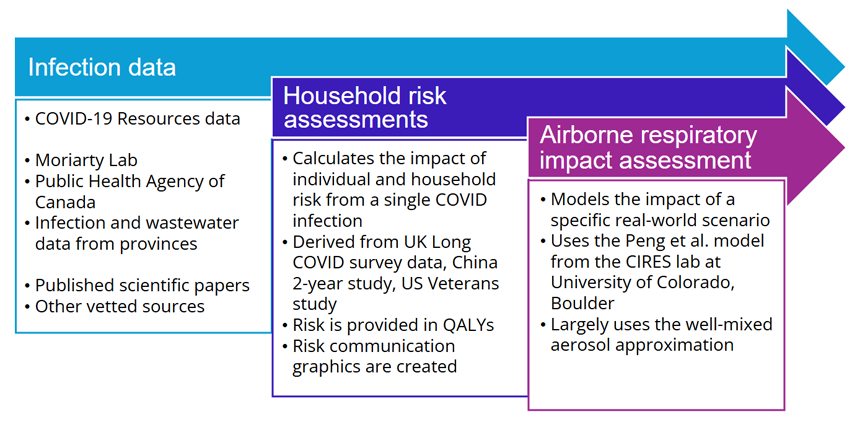
Created by Dr. Christensen, the ARIA uses science and data to assess risk. It considers:
- local infection rates from Canadian COVID-19 Forecast data,
- your vaccination status,
- long COVID risk based on your age,
- room size and ventilation quality, and
- who is masking and the type of masks used.
The ARIA helps you understand the risks of specific activities.
We use it to suggest ways to reduce risk.

Want your own assessment?
Curious about a specific activity?
Request a personalized assessment!
- Fill out our ARIA questionnaire form here
- Then, plan to come to a COVID-19 Data Discussion event here
- We’ll let you know when your assessment is ready – It takes at least two weeks
- If we can, we’ll also email you if we choose your assessment for a Tuesday presentation
Join the conversation!
On select Tuesday evenings, Dr. Christensen hosts COVID-19 Data Discussions. He delves into real-life scenarios, dives into the latest research, and shares tips to make daily life safer.
How we use the assessment
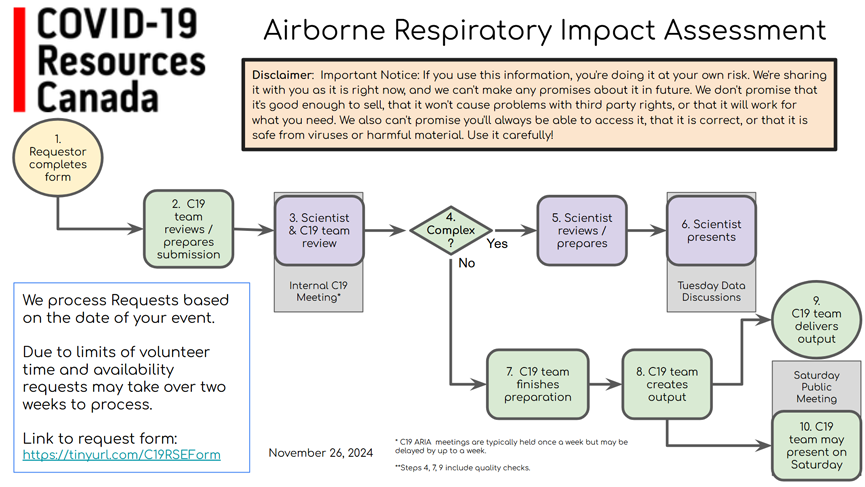
Here’s what happens:
- The ARIA team reviews your request;
- if your scenario is featured in a Data Discussion, we’ll ask for your permission;
- if you provide your email, we’ll send you a copy of your results.
Note: It takes at least two weeks to create and verify your assessment. This ensures the results are accurate and reliable, so plan ahead if you need it for a specific event.
Work in progress: Standard assessments
We are also making a set of standard assessments. These will be based on scenarios people asked about. We make them general so everyone can use them. We will update these standard assessments when COVID-19 rates in Canada change a lot. We’ll change them if the rates go up or down by 50% or more. Always check the date on the assessment. This way you know you have the most recent information.
Disclaimer: Important Notice: If you use this information, you’re doing it at your own risk. We’re sharing it with you as it is right now, and we can’t make any promises about it in future. We don’t promise that it’s good enough to sell, that it won’t cause problems with third party rights, or that it will work for what you need. We also can’t promise you’ll always be able to access it, that it is correct, or that it is safe from viruses or harmful material. Use it carefully!